Coffee Station
A minimal home coffee station built around function, materials, and daily use.
A home coffee station has always felt essential to me. During the past half year, I slowly built this coffee station piece by piece — focusing on usability, durability, and visual balance.
Espresso setup
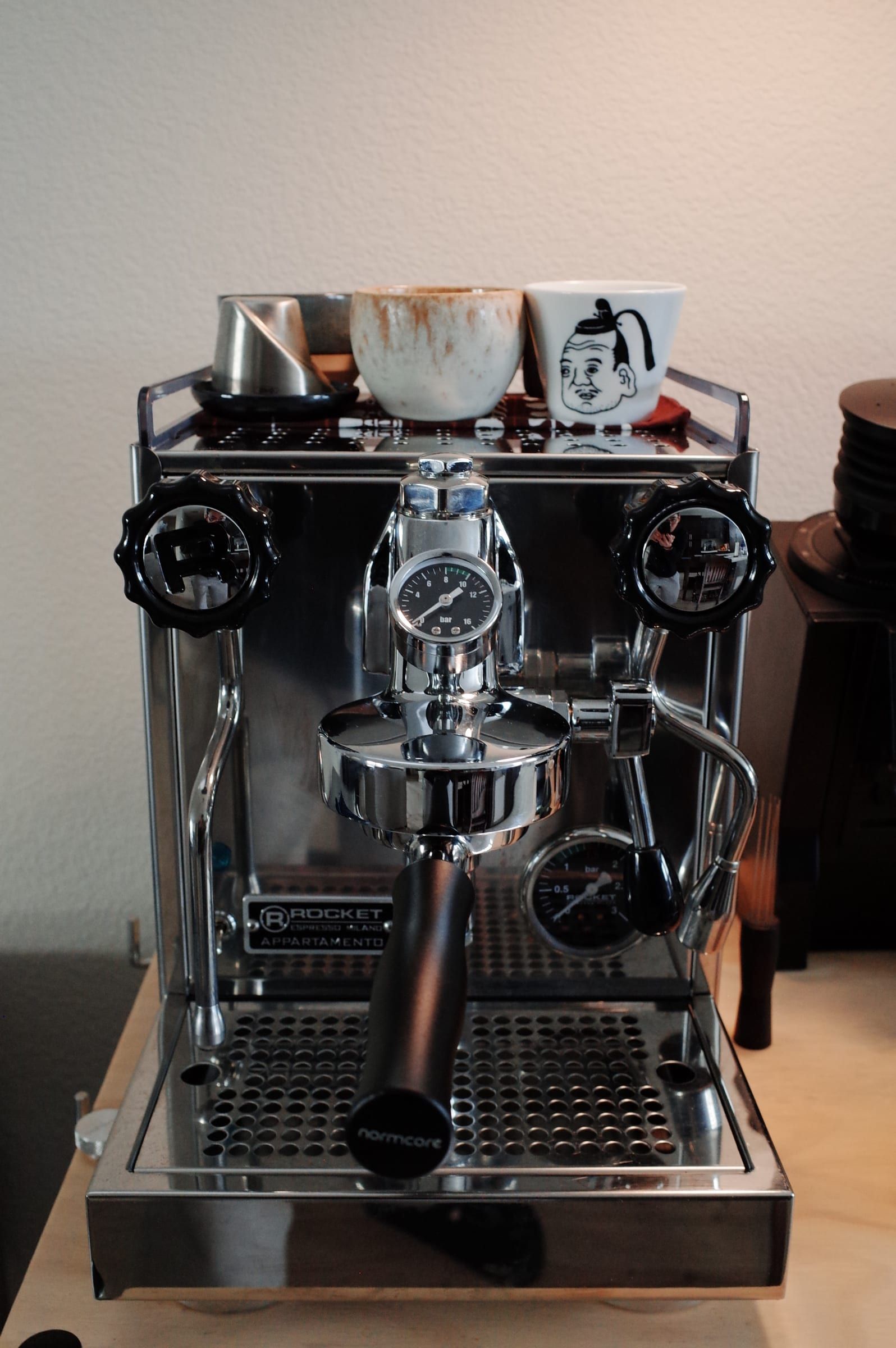
The espresso machine is a Rocket Appartamento. I chose it for its proportions, materials, and price point. While it’s not a commercial machine, it performs reliably for home use. I also added a pressure gauge to monitor extraction pressure.
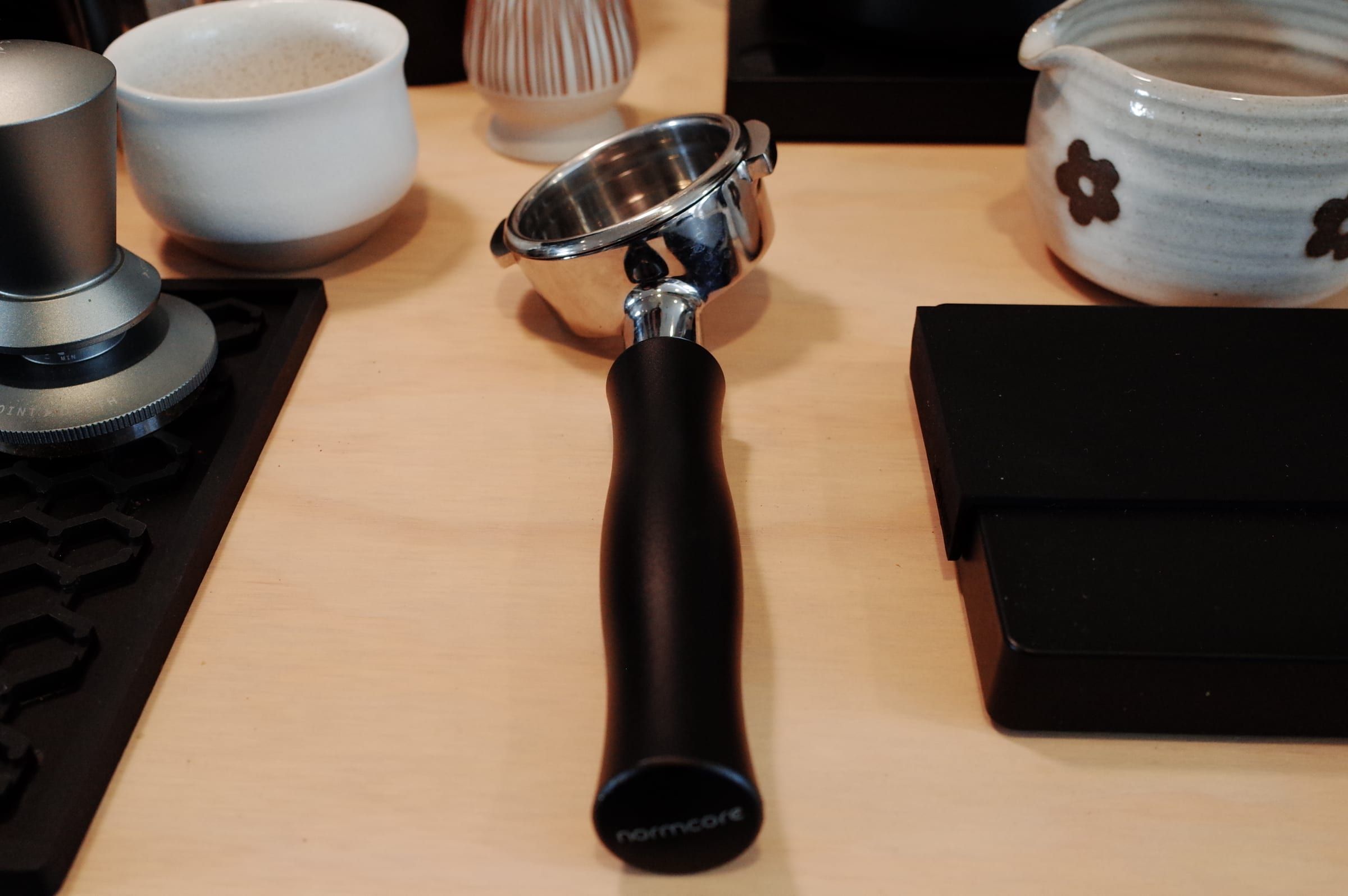
I use this bottomless portafilter from Normcore, which makes shot diagnosis straightforward and helps fine-tune grind size across different beans.
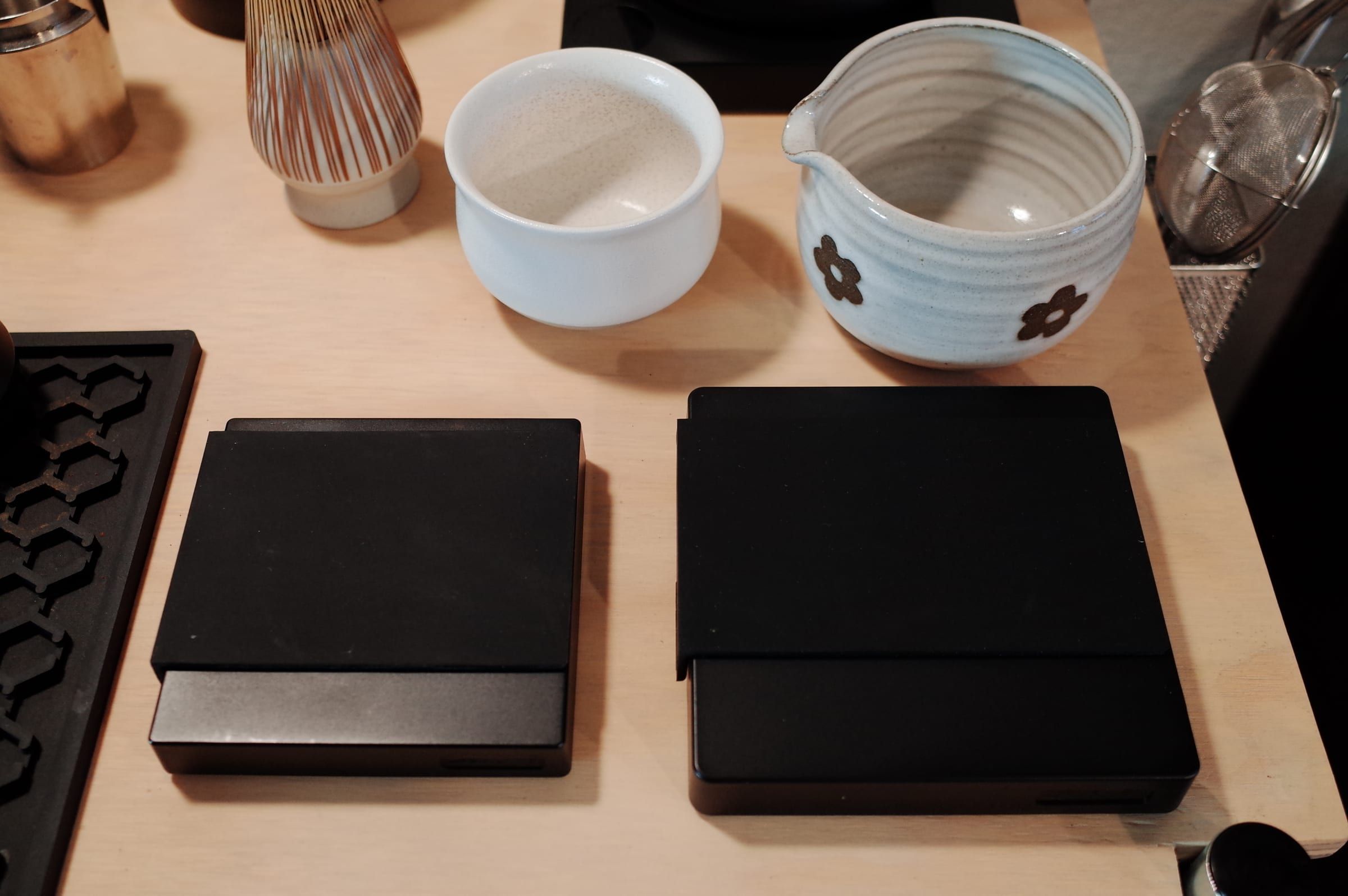
For weighing and timing, I use two scales from MHW-3BOMBER — a standard size and a mini version. Both support timer functions and fit naturally into the workflow.
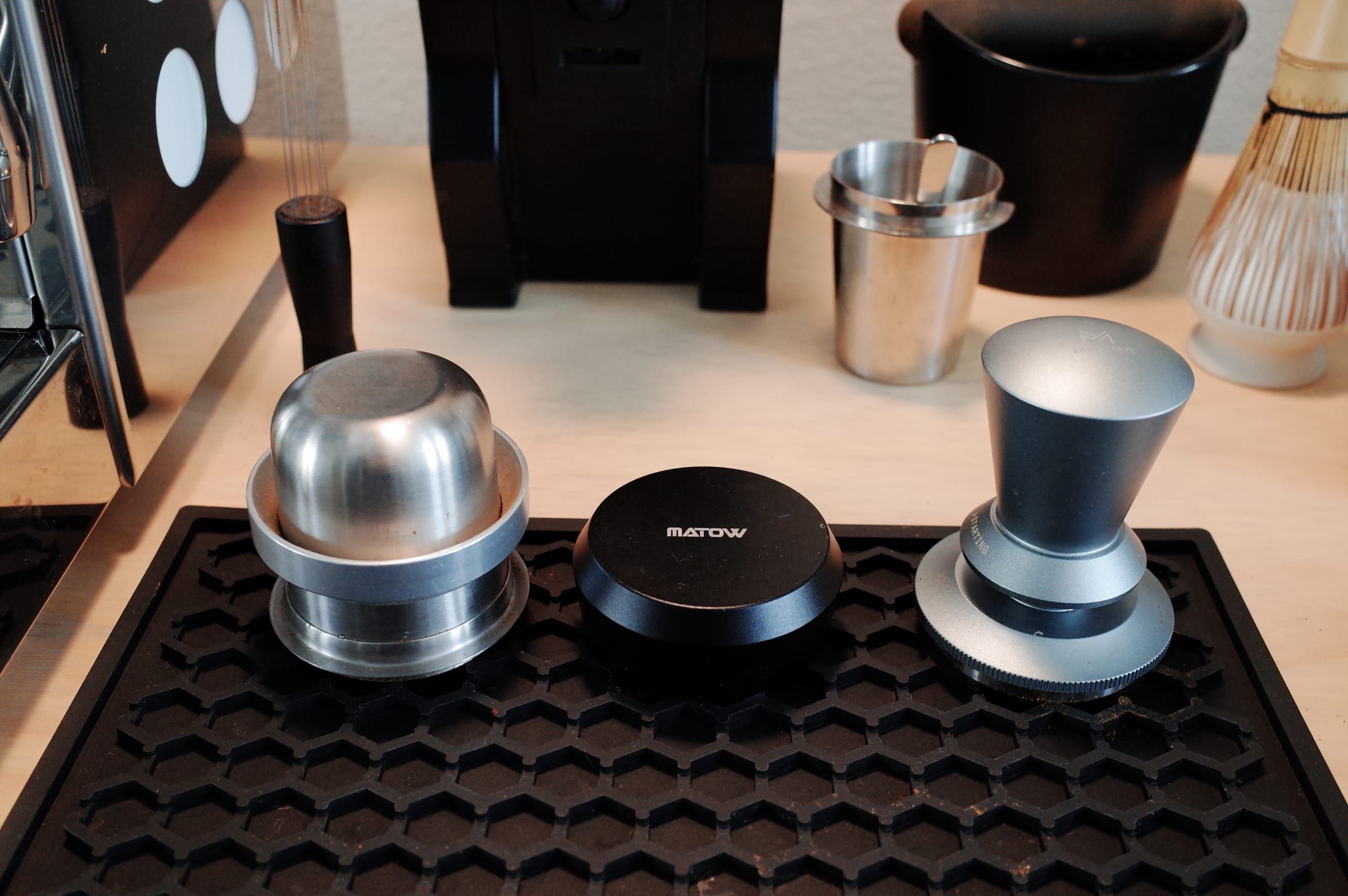
The dosing cup and funnel are from Taiwan (brand unknown). For distribution and tamping, I use a MATOW gravity distributor and a MUVNA tamper.
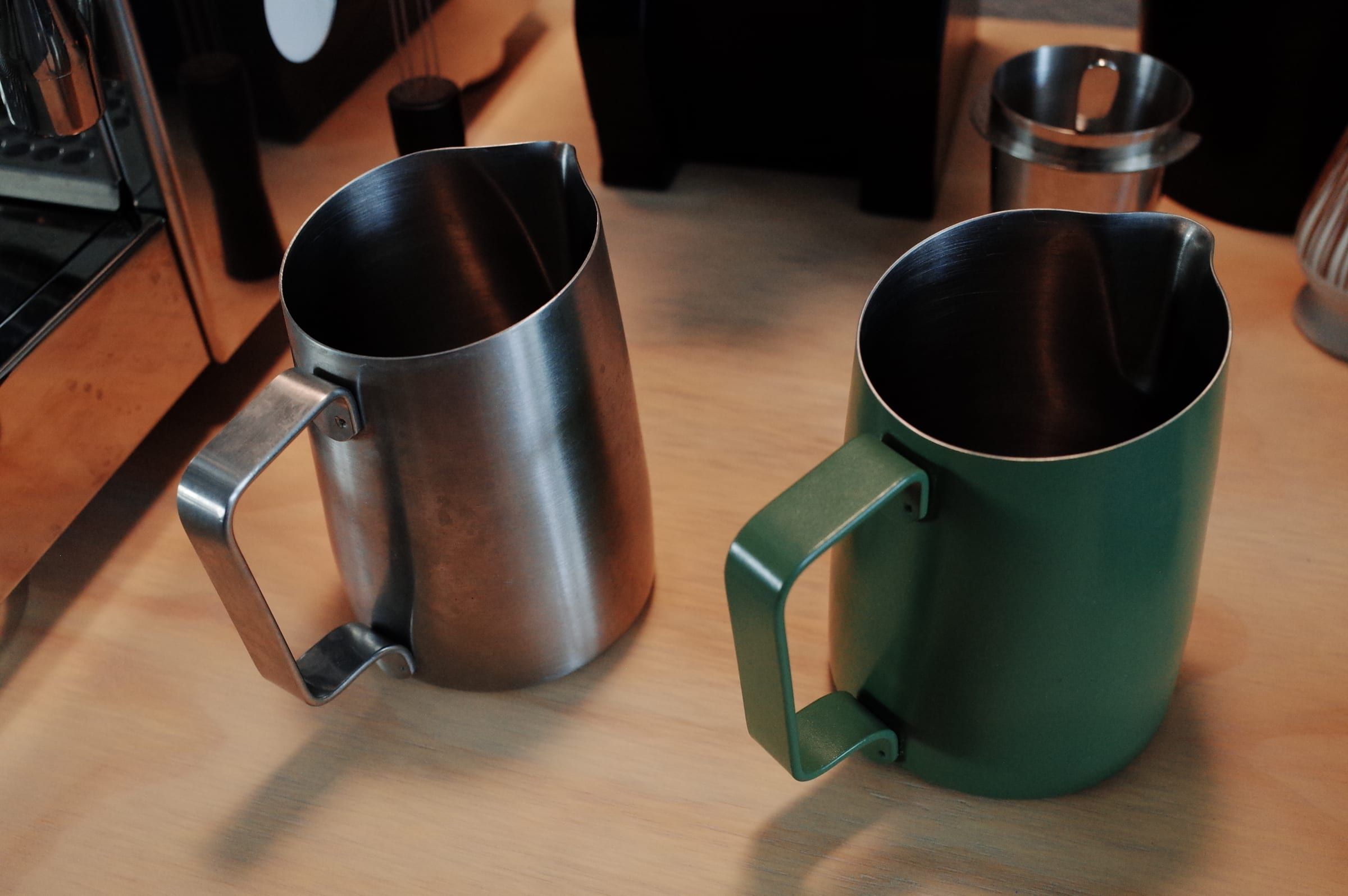
Milk pitchers play an important role in consistency. I use two WPM pitchers — one narrow spout and one wide — depending on the drink and foam texture.
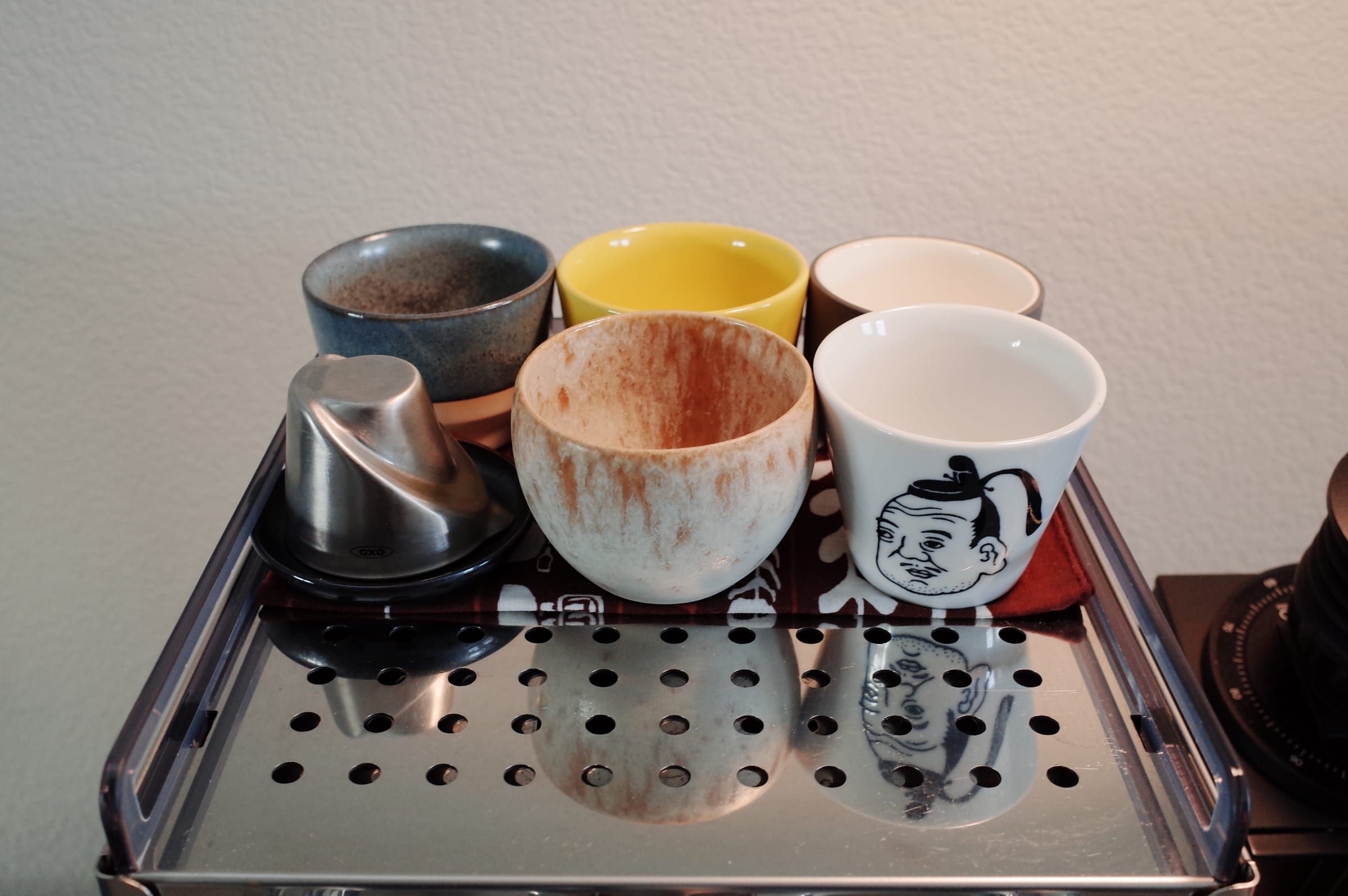
Cups are stored on top of the machine to stay warm:
- Blue and yellow cups from Hartmud Studio
- Gray cup from a small shop in San Francisco
- Brown cup from La Cabra
- Espresso measuring cups from OXO
- White cup from a Japanese shop, featuring Tokugawa Ieyasu. (德川家康)
|
Grinder
The grinder is a Eureka Mignon Notte. It has a clean form factor and works well for a home setup. Retention can be an issue, so frequent cleaning is necessary.
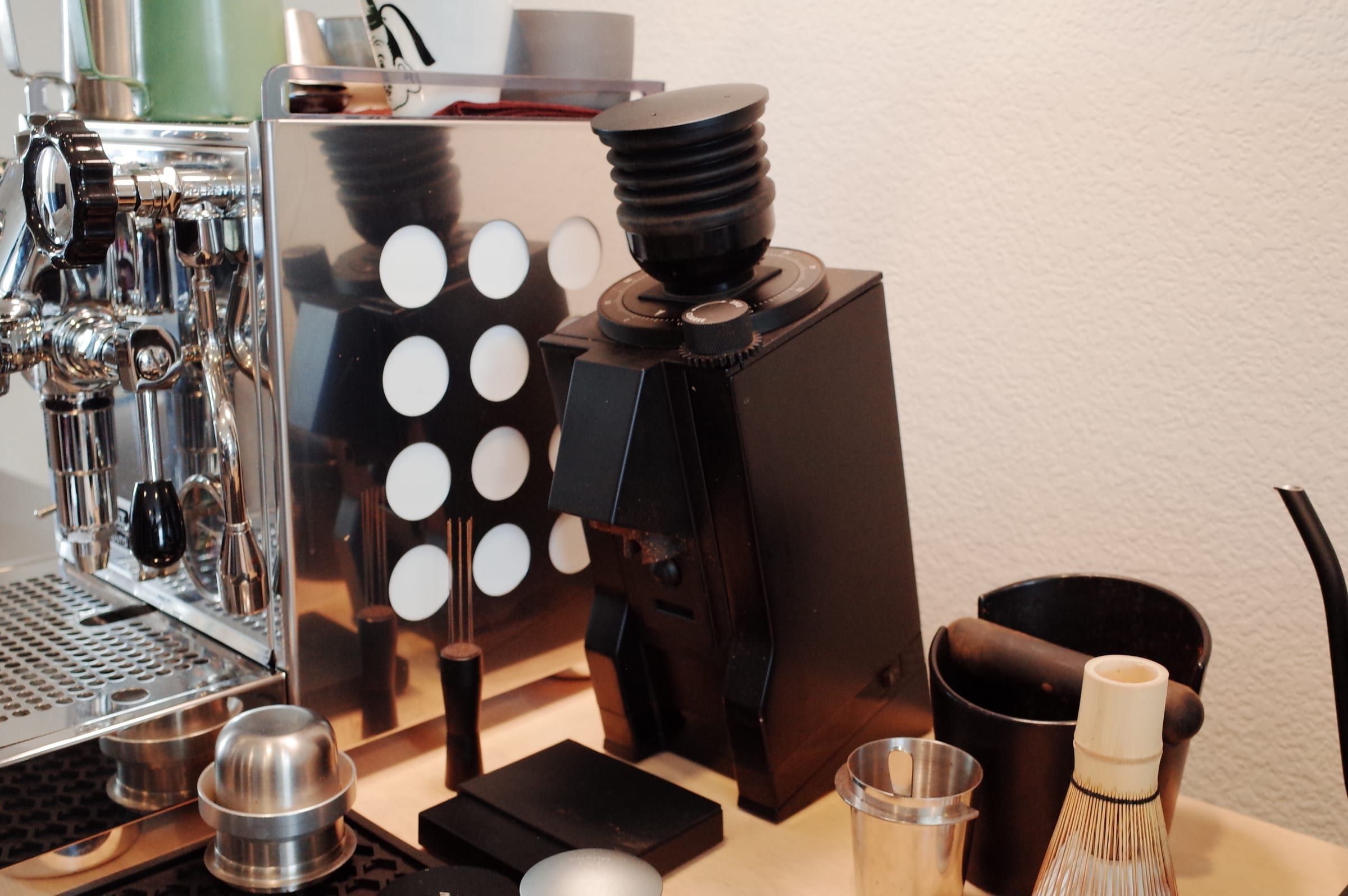
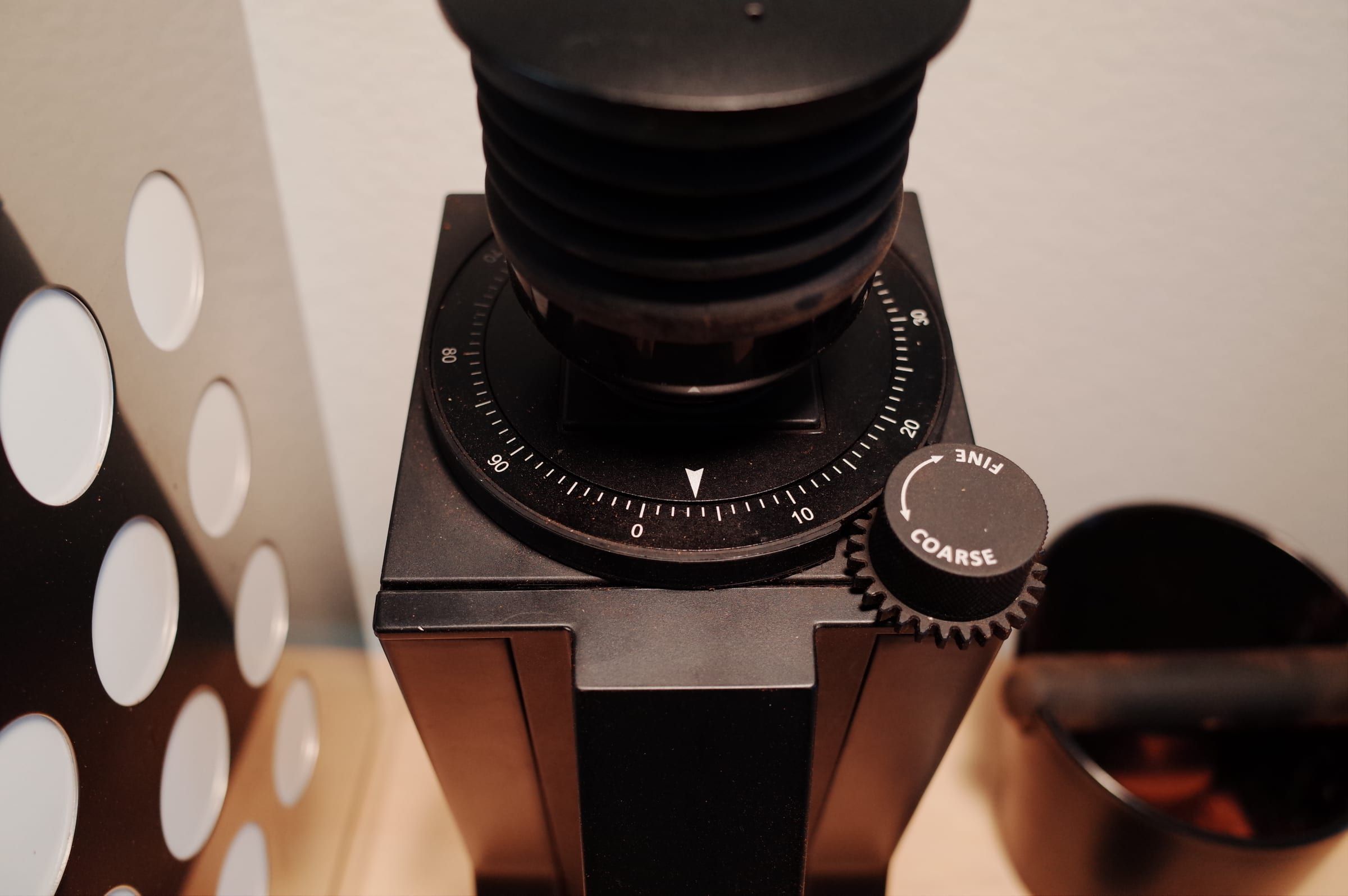
To improve usability, I added a single-dose hopper, an incline stand, and an upgraded adjustment dial. These modifications significantly reduce clogging and improve consistency.
|
Maintenance
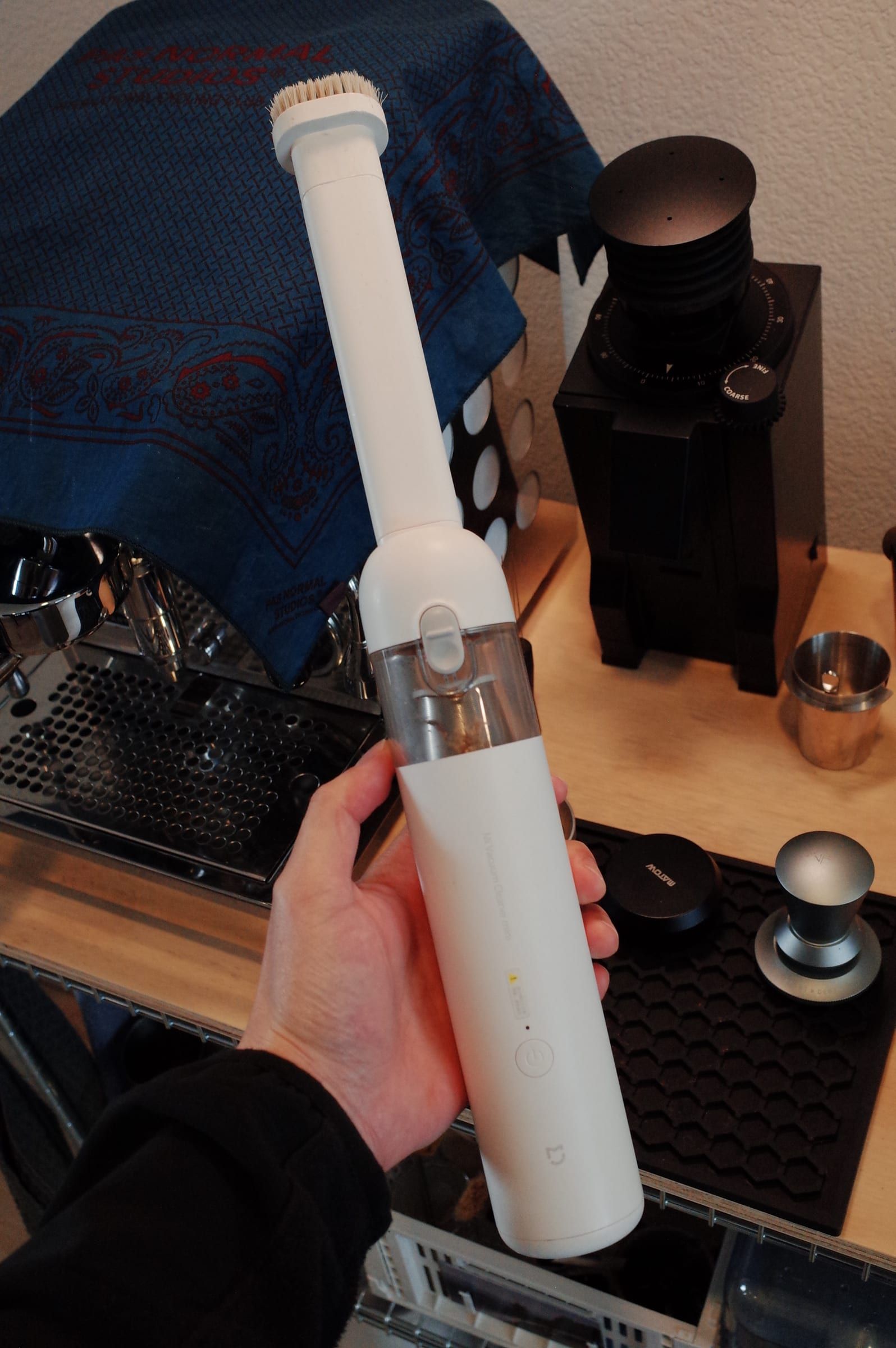
For daily cleaning, I use a compact Xiaomi handheld vacuum. Its size makes it easy to store nearby, and it’s powerful enough for coffee grounds.
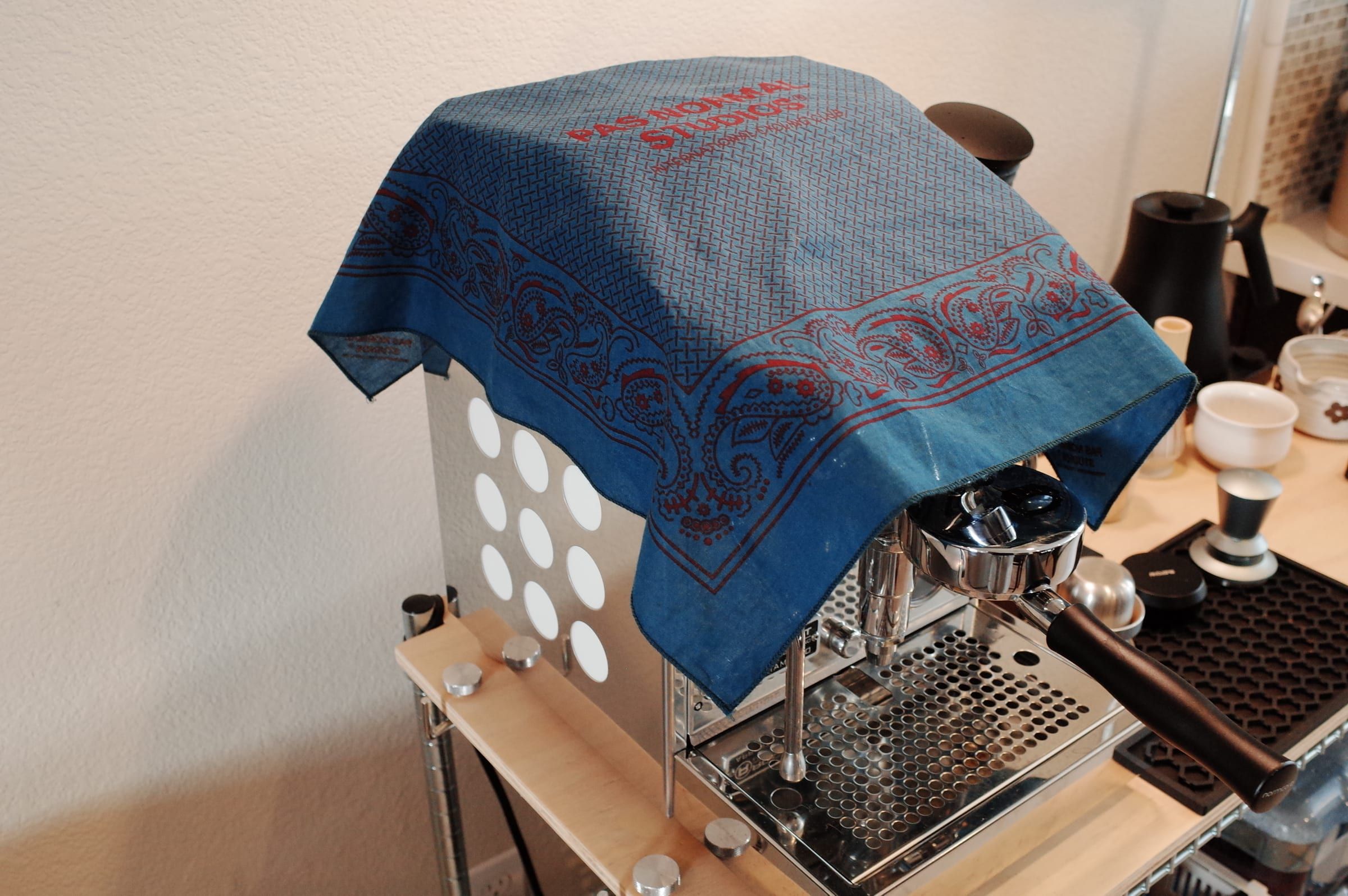
When the machine isn’t in use, it’s covered with a Pas Normal Studios bandana. It keeps dust away and helps retain heat during warm-up.
|
Pour-over & matcha
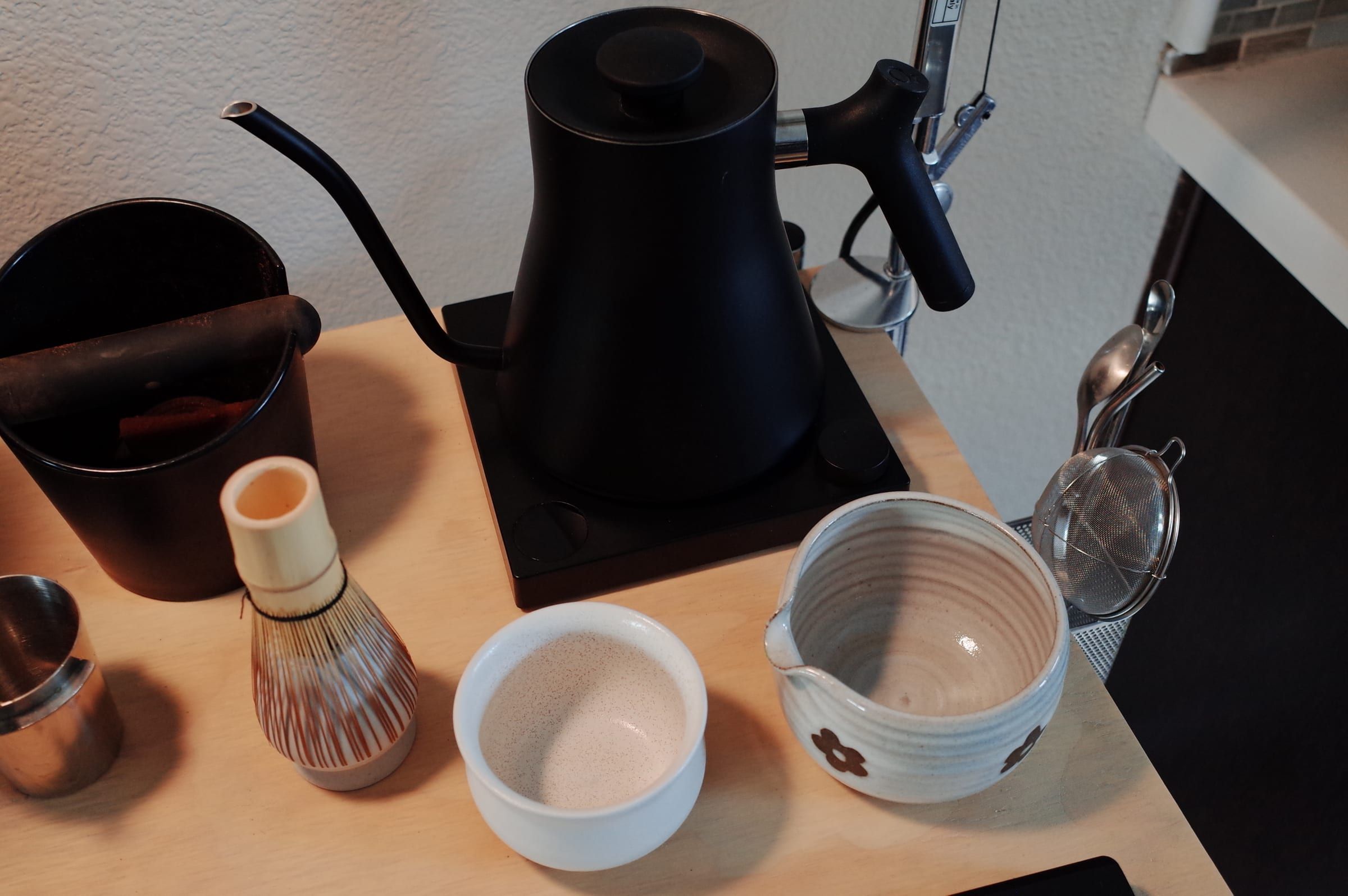
For pour-over and matcha, I use a Fellow electric kettle for precise temperature control and consistency. The matcha bowl was found on Etsy, and the ORIGAMI Pinot Flavor Tea Bowl is used to warm the bamboo whisk before whisking.
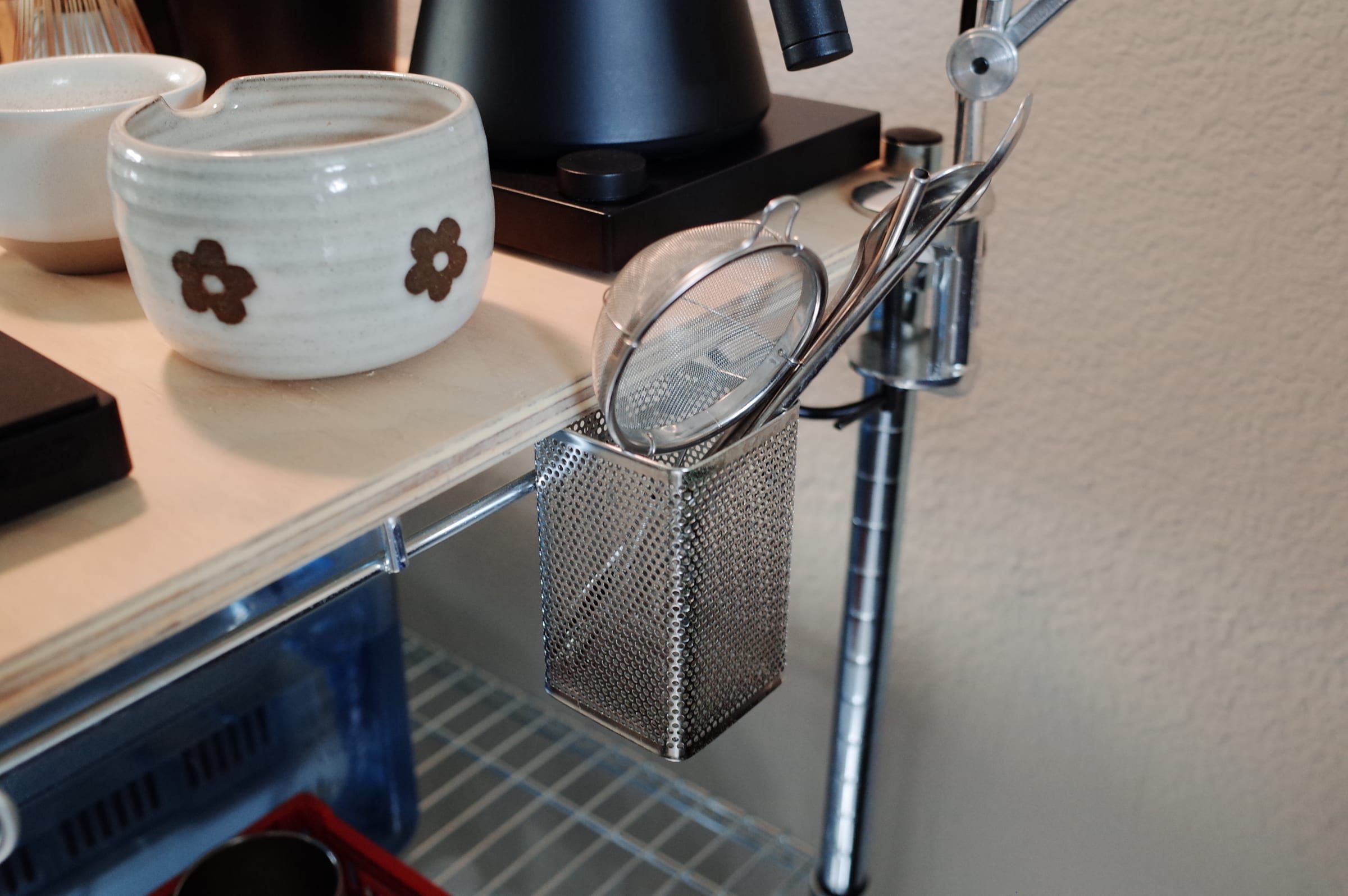
A stainless steel basket from MUJI is mounted on the side to store matcha tools and accessories.
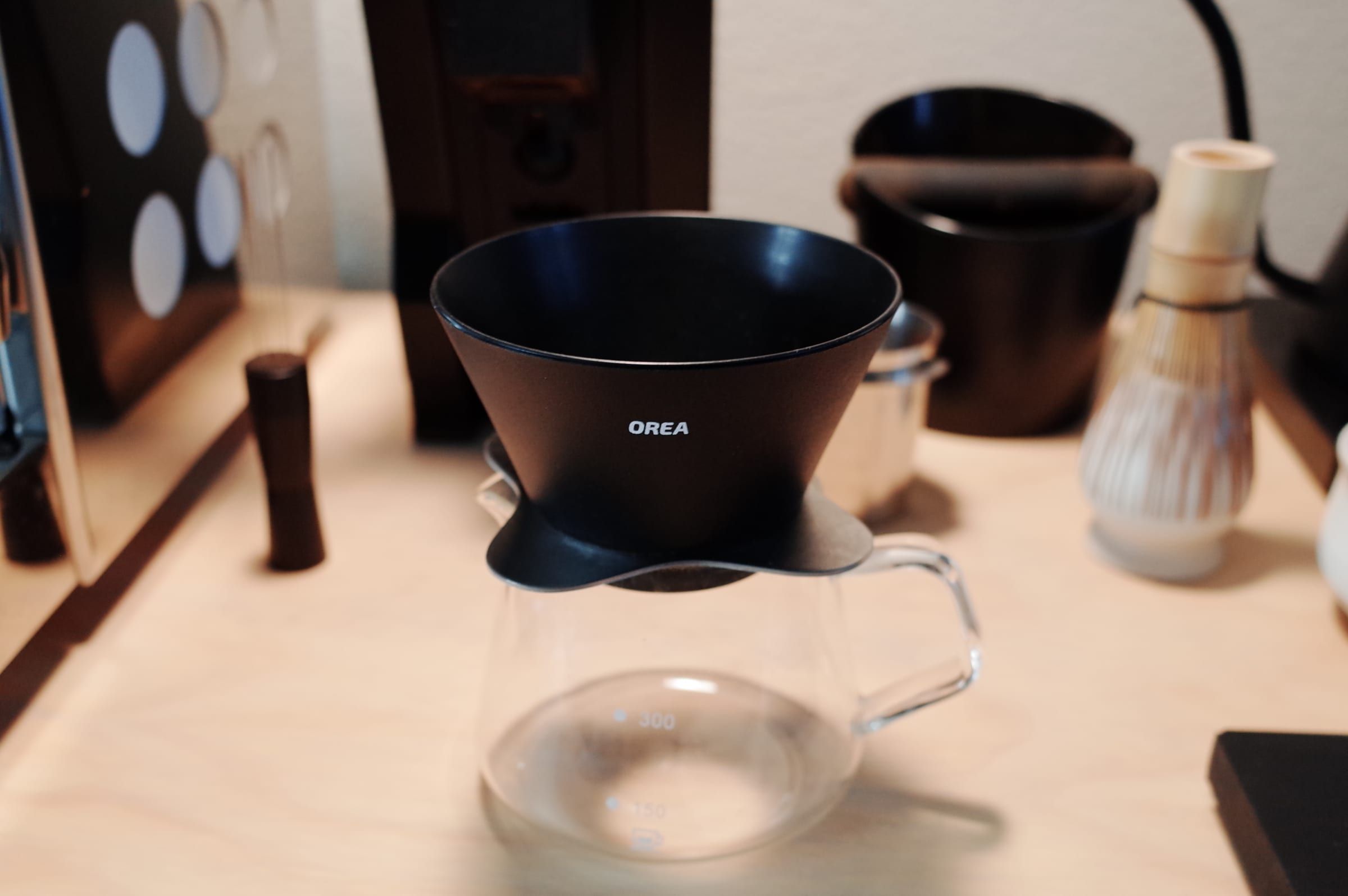
The pour-over brewer is an OREA V4, which includes four interchangeable bases. Each base slightly changes flow and extraction characteristics.
|
Shelf
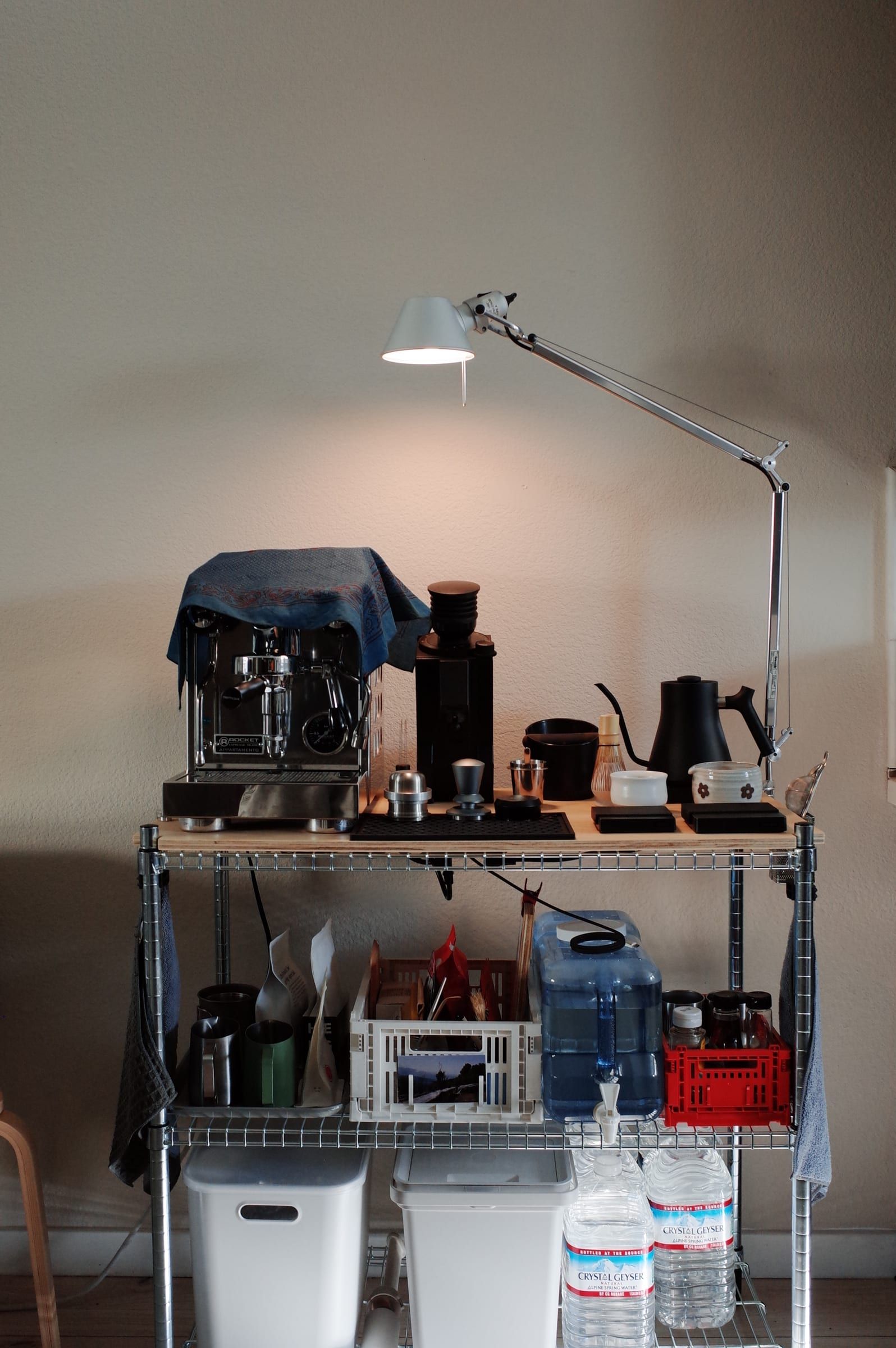
Instead of a desk, I chose the IKEA OMAR shelf for its modularity and open structure. The three-tier layout provides sufficient storage while keeping the footprint minimal.
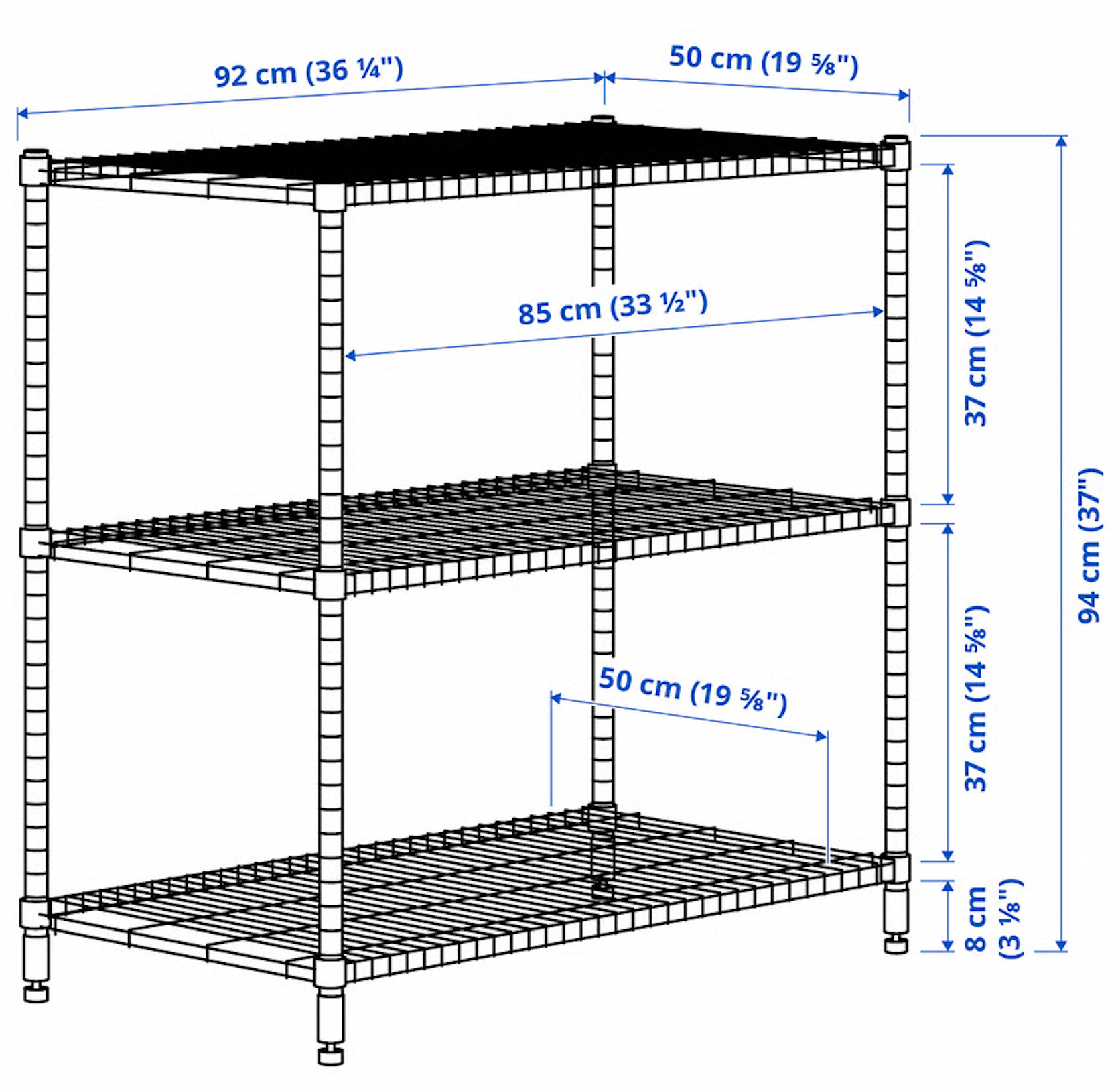
The original top surface wasn’t suitable for daily coffee prep, so I covered it with a custom-cut plywood panel. The board was cut to size, with a corner removed to fit the frame precisely.
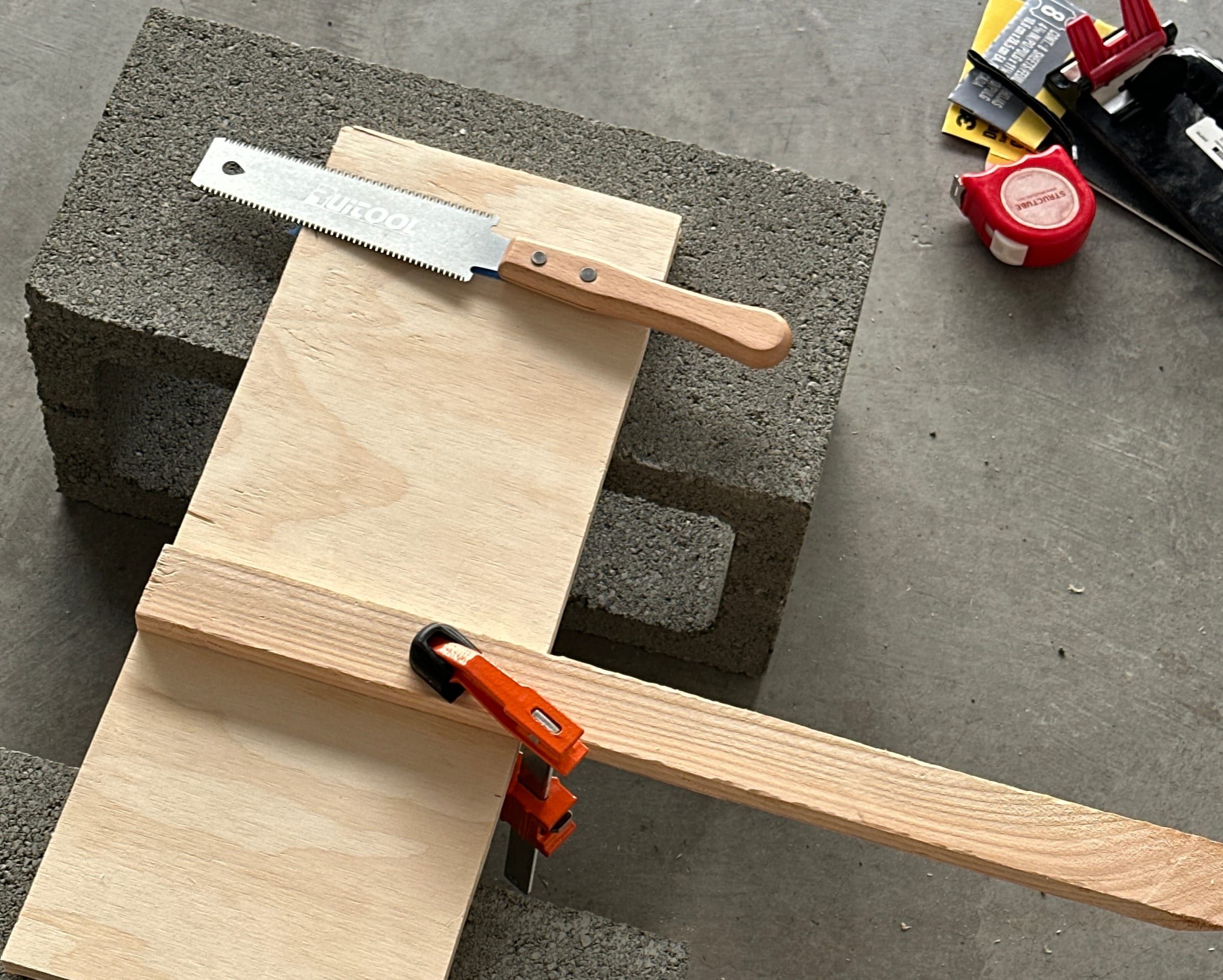
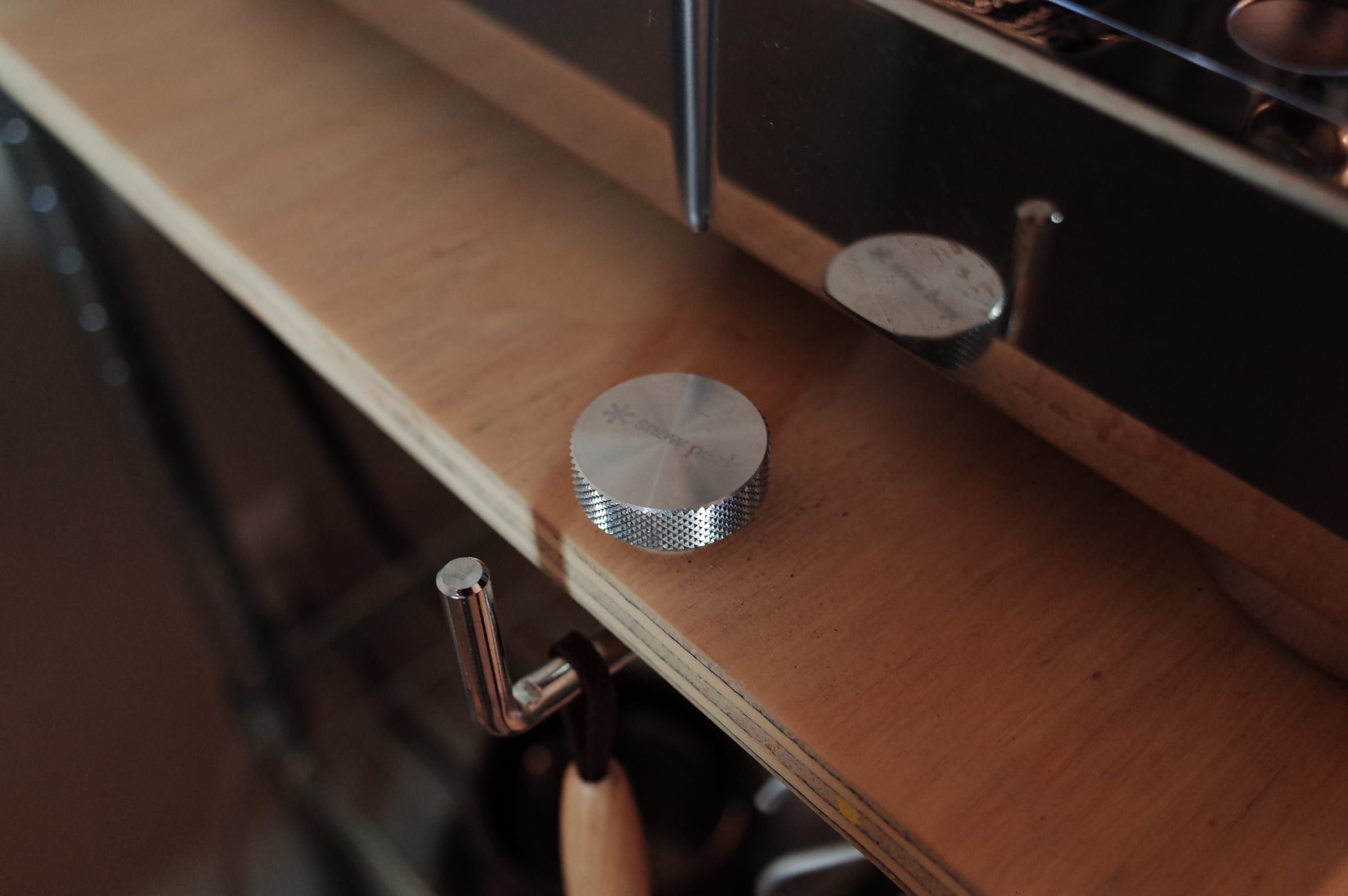
To extend vertical storage, I drilled two holes on the side panel and installed Snow Peak hooks for hanging tools.
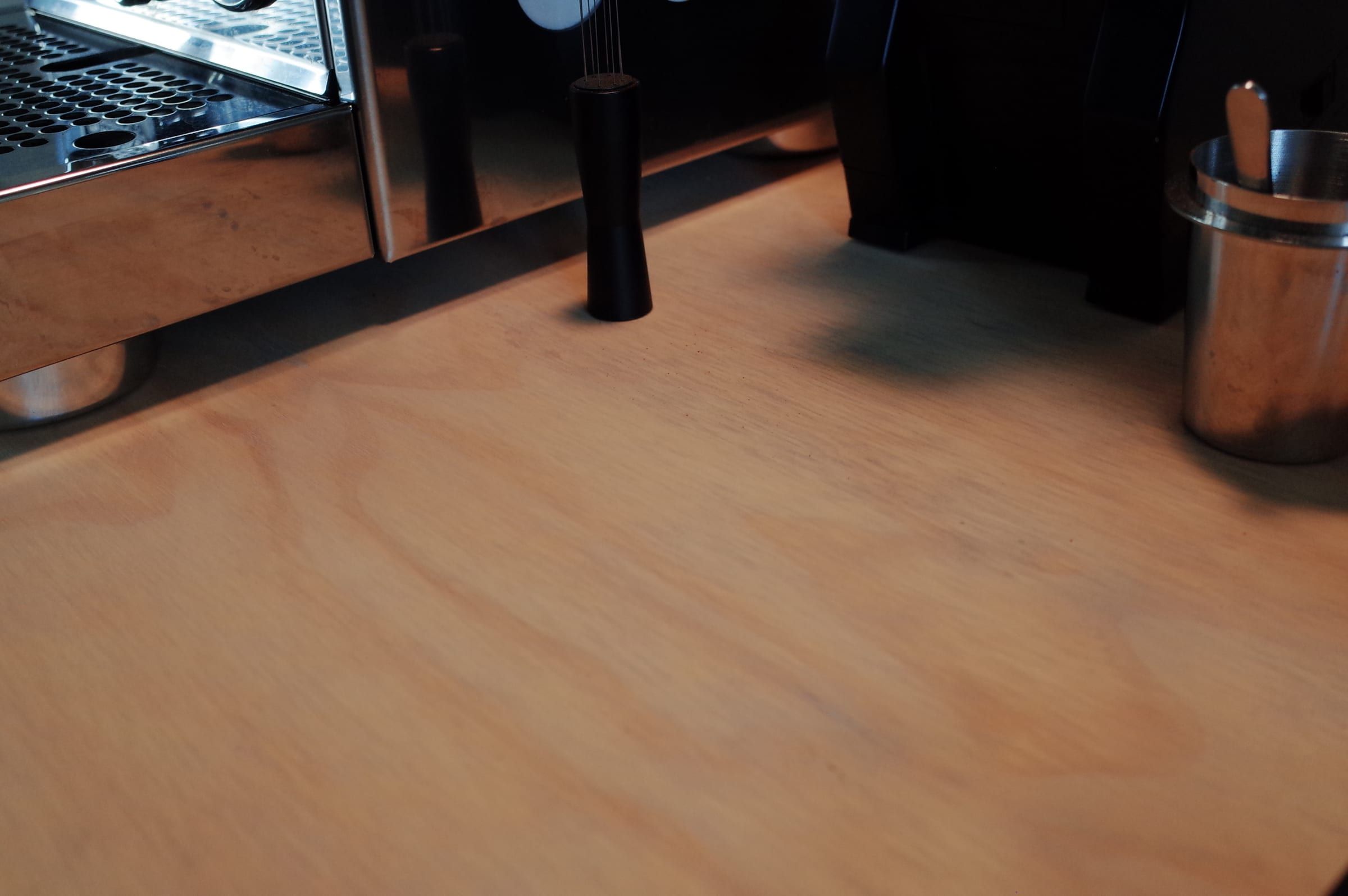
The surface is finished with Rubio Monocoat. After curing for a few days, it achieved a light, natural tone with a subtle texture. The finish is water-resistant and works well for a coffee workflow.
Finally, I mounted my favorite lamp, Tolomeo, on the side to provide soft overhead lighting.
Cheers! ◡̈
Related